Outbound rules
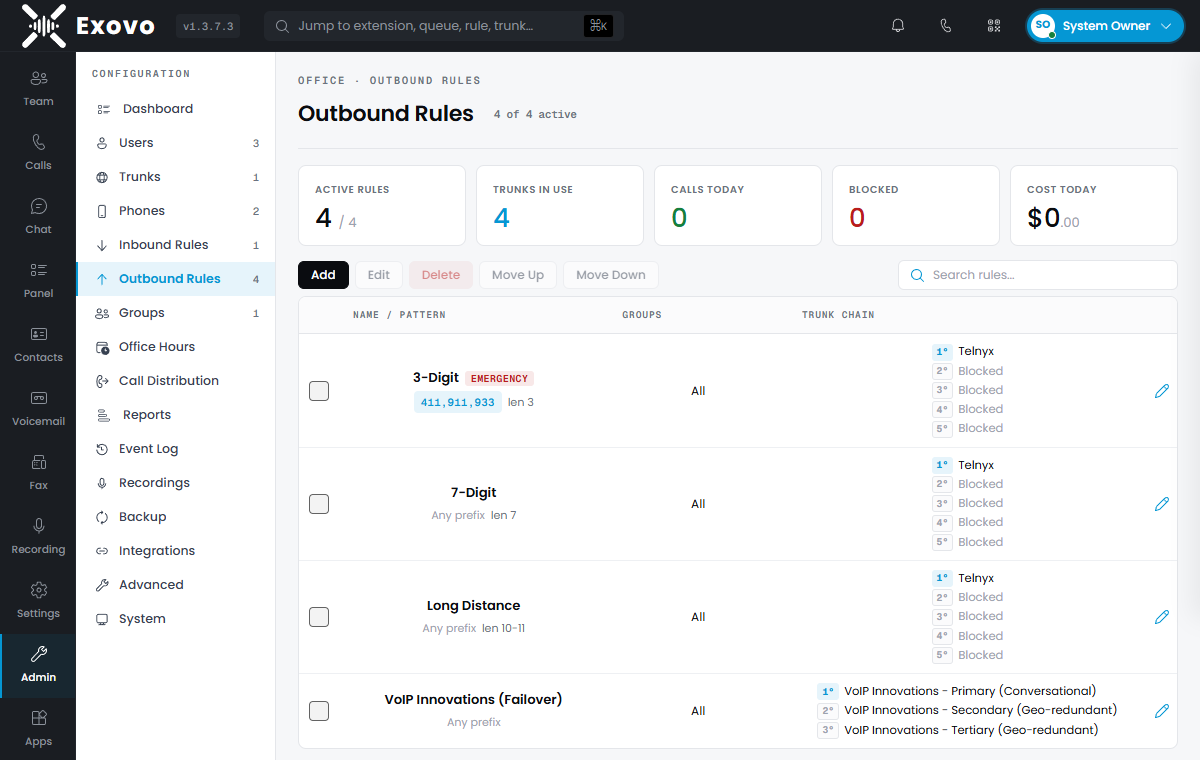
Outbound rules decide whether a dialed number may leave the system, which trunk carries it, and what the number looks like when it does. Calls that match no rule don't go out — the rules are your outbound dial plan.
Matching a rule
Admin → Outbound Rules → Add. A rule matches on any combination of (empty = any):
- Prefix — the dialed number starts with these digits. Comma-separated, ranges allowed
(
0-3,5,6). - Number length — comma-separated or ranged (
9,10,13-15). Length is the cleanest way to separate local (7-digit), domestic (10-11) and international dialing into different rules. - Calling extensions — restrict the rule to certain extensions (
100,103-105) or to groups, so e.g. only Sales can dial international. The two are alternatives: a caller who is on the extension list or in a ticked group may use the rule. A caller who matches neither skips it and is tried against the next rule down. Emergency rules ignore the group filter.
Rules evaluate top-down; the first match wins. A classic US layout is exactly what a fresh system's rules look like: an emergency rule (911/933), a 7-digit local rule, a 10-11-digit long-distance rule, each pointed at your trunk.
Routes and failover
Each rule has up to five route slots, tried in order — if the first trunk is down or rejects the call, the next takes over automatically. Each route sets its own:
- Trunk — or left empty, which shows as Blocked: a rule whose first slot is blocked is a deny rule, stopping those calls outright.
- Strip digits / Prepend — digit surgery per trunk. Strip removes leading digits from the
dialed number, prepend adds them, so users can dial one way while each carrier receives the
format it expects (strip a
9office prefix; prepend1for a carrier that wants 11 digits). - Outbound caller ID — override the caller ID for calls leaving via this route (see Caller ID).
Dialing classes
Required dialing class (None / Local / Domestic / International / Premium) gates a rule by user permission: when set, only extensions granted that class can use the rule. Combined with prefix/length matching this gives per-user toll control — most users get Local + Domestic, finance approves who gets International, and nobody gets Premium. Emergency rules always bypass class restrictions.
Blocking calls
To block a destination (premium-rate prefixes, a country you never call), create a rule matching it above your permissive rules and leave its routes empty (Blocked). The stat strip counts blocked call attempts. For known fraud destinations also see toll-fraud protection and the allowed-country-codes list.
For a specific blocked telephone number or prefix, you can also use the Number Blacklist, including rules scoped to one extension.